
Context / probleemstelling of aanleiding
Thema:
Power, participation, and belonging in communities of practice in health professions education.
In health professions education, communities of practice are central to how students and professionals learn. Wenger’s concept of legitimate peripheral participation assumes gradual, supported movement from the periphery to the center of practice. Yet, in reality, learning trajectories are often disrupted by what can be called <i>“kidnapping the practice”</i>: moments when dominant actors or structures block authentic participation, reinforcing hierarchies and limiting agency.
This workshop critically explores how practices in clinical and educational settings can be “kidnapped,” what this means for learners, and how educators can recognize and counteract it. For participants engaged in supervision, curriculum design, and faculty development, this perspective is relevant to fostering inclusion, belonging, and social justice in education.
Doel:
The purpose of this workshop is to critically explore how participation in health professions education can be “kidnapped” by power and hierarchy, and to co-create strategies for inclusion, belonging, and authentic professional growth.
<b>Learning Goals</b>
After the workshop, participants will be able to:
Explain the concept of legitimate peripheral participation and how “kidnapping the practice” distorts it.
Identify examples of “kidnapping the practice” in their own educational or clinical contexts.
Reflect on the impact of power, hierarchy, and hidden curricula on learners’ participation.
Develop strategies to create more equitable and inclusive opportunities for participation in communities of practice.
Doelgroep:
Educators, clinical supervisors, curriculum designers, and researchers in health professions education.
Opzet: activiteiten en opbrengst:
Workshop plan
Introduction (0–10 min)
Team: Facilitators
Explanation: Facilitators introduce Wenger’s concept of legitimate peripheral participation (LPP) and the metaphor of “kidnapping the practice.” Outcome is a shared conceptual grounding.
Experience mapping (10–25 min)
Team: Small groups
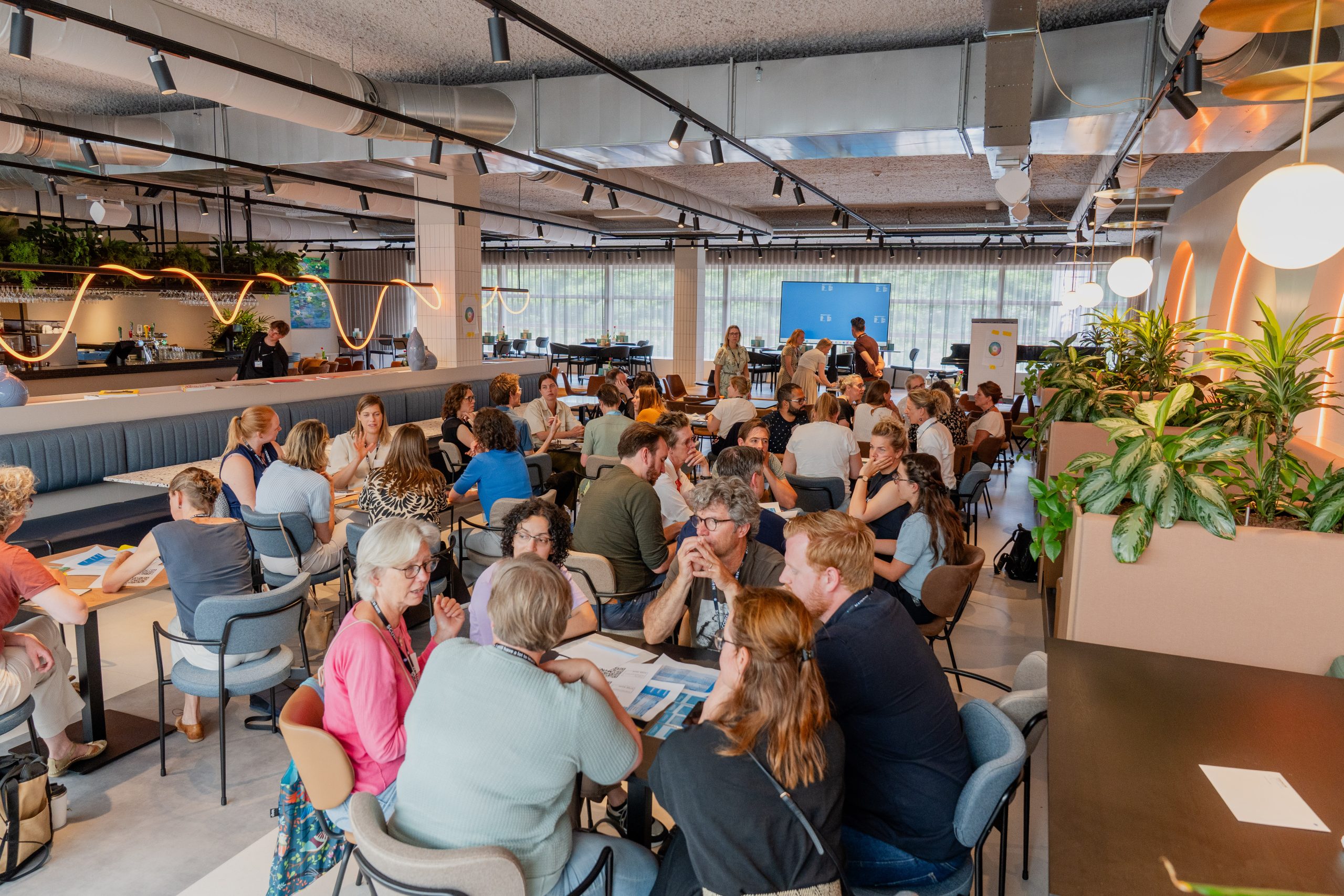
Explanation: Participants share personal or observed examples where access to practice was blocked, distorted, or controlled. Outcome is collective recognition of real-life situations.
Analysis through lenses (25–35 min)
Team: Small groups
Explanation: Groups analyze the shared cases using different perspectives: hierarchy, identity, hidden curriculum, and agency. Outcome is deeper understanding of mechanisms of “kidnapping.”
Designing responses (35–65 min)
Team: Small groups
Explanation: Groups brainstorm interventions and strategies to counteract “kidnapping” in their own contexts. Outcome is concrete ideas and tools.
Plenary wrap-up (65–75 min)
Team: Whole group and facilitators
Explanation: Groups share their key strategies. Facilitators summarize themes and connect insights to broader literature. Outcome is take-home strategies and inspiration for change.
Referenties (max 2.):
Wenger, E. (1998). <i>Communities of practice: Learning, meaning, and identity</i>. Cambridge University Press.
Hafferty, F. W. (1998). Beyond curriculum reform: Confronting medicine’s hidden curriculum. <i>Academic Medicine, 73</i>(4), 403–407.
Max aantal deelnemers :
30